Welcome to the Silk Road Website
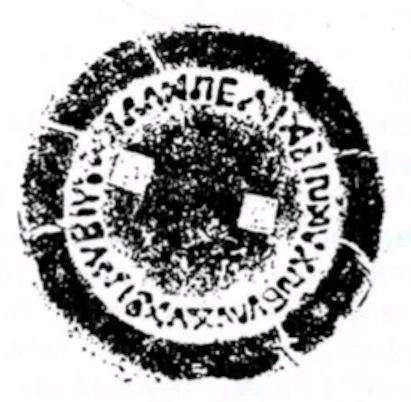
Eastern Han ingot imprints with Greek inscriptions, excavated in Shaanxi, China. 1st-2nd century CE. Source: Joe Cribb, in ‘Chinese lead ingots with barbarous Greek inscriptions in Coin Hoards’ p.76-78 Source: Wikimedia Commons

The name Silk Road evokes the idea of an ancient commercial route spanning the breadth of the known world, featuring caravans of traders bringing fine silk cloth from China to Rome. Yet the term has always been something of a misnomer—both revealing and concealing the diverse histories of exchange it represents. This class is intended as a historical journey that puts those ‘known’ histories in conversation with the ‘hidden’ ones. Building on a range of literary and material sources, we will interrogate the multiple silk roads and their afterlives. The class will take a thematic approach to cultures of exchange among people from diverse geographies, languages, and religions. Students will consider a novel approach to the history of cultural and economic exchange that links the earliest experiments in sericulture to the more contemporary Belt and Road Initiative undertaken by China. In doing so, the course reveals a fascinating history of connections and disjuncture that has shaped the Eurasian landscape and its cultures.
The header image on this page is a modern statue depicting premodern Silk Road merchants. The statue is on the Ota Gate in Khiva, modern day Uzbekistan, which is located about 600 kilometers east of the Caspian Sea. Source: Wikimedia Commons
.jpg)